
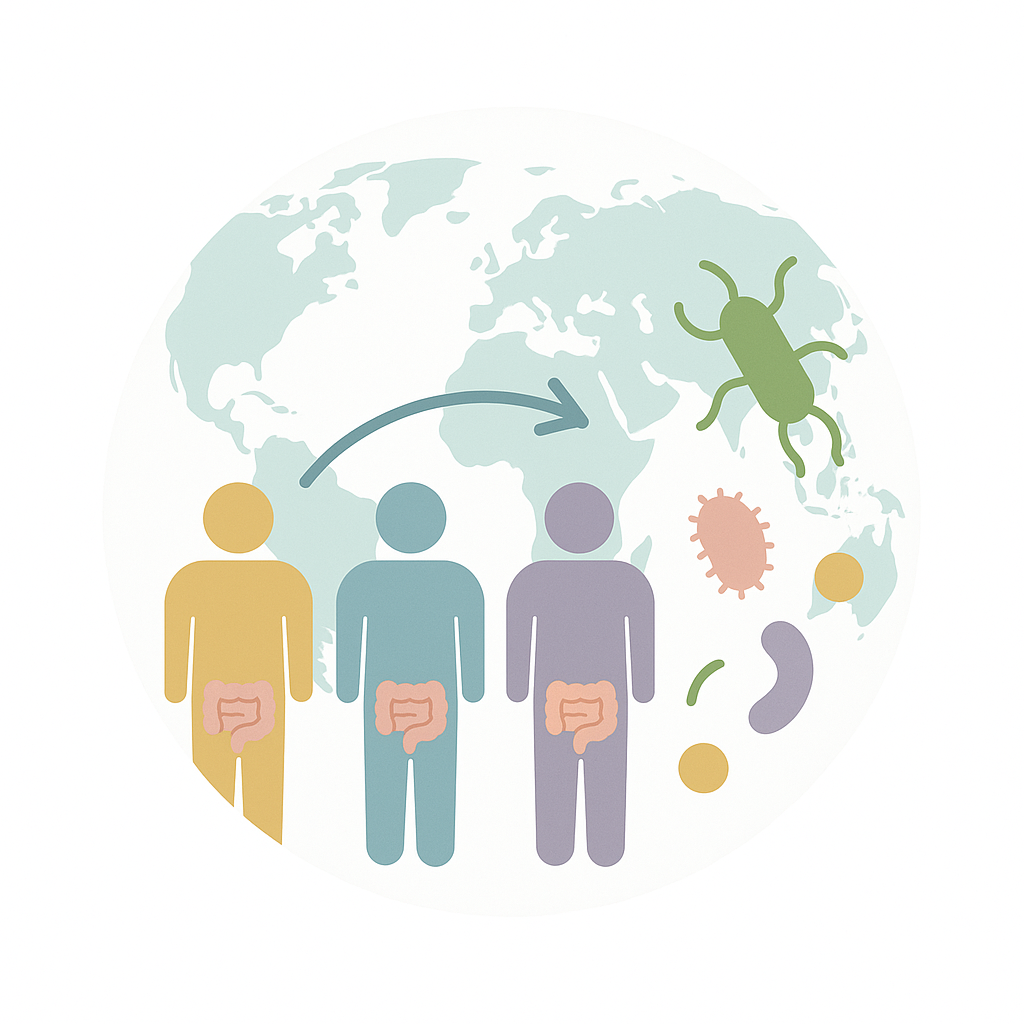
This project investigates the global diversity of the human gut microbiome and its associations with host health and disease. It aims to address the geographic bias in microbiome research, which predominantly focuses on Western populations and thereby limits the identification of universal disease-related signals. By integrating large-scale gut metagenomic datasets from diverse human populations processed through the same bioinformatic pipeline, this project explores how geography, cultural practices, and lifestyle shape the gut microbiome.
Approach
The primary aim is to generate standardized and comparable taxonomic and functional microbiome profiles across studies, systematically addressing batch effects and confounding variables. To achieve this, state-of-the-art high-throughput metagenomic pipelines, including TOFU-MAaPO for data processing and tools like MMUPHin for batch correction, will be leveraged. Both statistical methods and advanced machine learning approaches will be applied to identify associations between microbiome features and host traits across diseases, demographics, and lifestyles. The resultant profiles will be shared with the wider research community to promote collaboration and open access.
Analysis & Validation
The analysis will incorporate publicly available gut metagenomic datasets and associated metadata from diverse cohorts to ensure a comprehensive representation of global populations. This approach will provide a deeper understanding of the role of the microbiome in health and disease and the impact of geography and lifestyle on microbiome composition and diversity.
Researcher:
Zaira Zafroon
 Host-microbiome systems in health & disease