
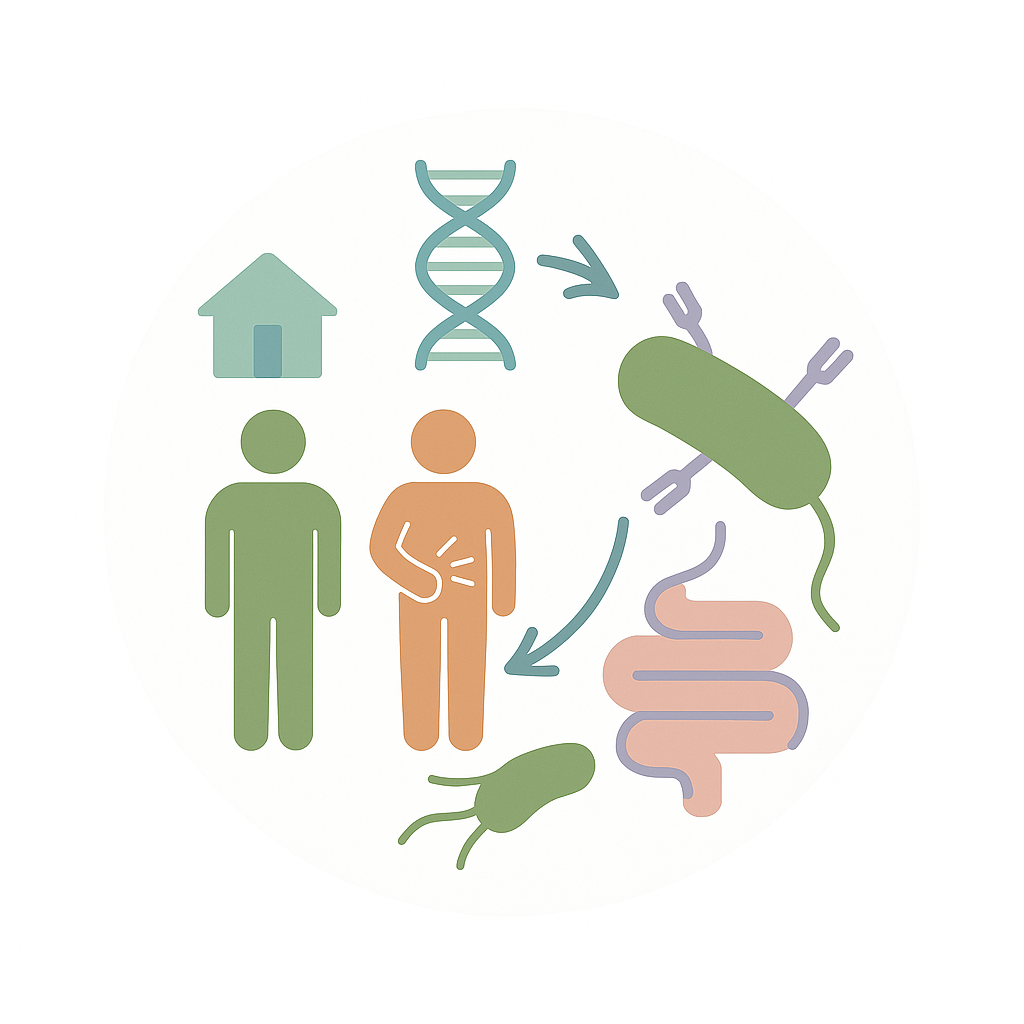
This project investigates the role of bacterial growth dynamics in shaping gut microbiome composition across diverse human lifestyles and chronic disease states. While differences in bacterial relative abundances between industrialized and non-industrialized populations are well documented, the underlying growth patterns that drive these variations remain poorly understood. By focusing on bacterial replication rates and maximum growth rates as metrics of growth, this project aims to uncover the impact of lifestyle, immune response, and disease states on bacterial population dynamics.
Approach
Specifically, this project seeks to address:
- The influence of lifestyle on bacterial growth patterns across diverse populations and disease states
- The relationship between bacterial replication rates and immune factors such as immunoglobulin A (IgA) bacteria coating
To achieve these aims, we will leverage shotgun metagenomic sequencing data from cohorts representing healthy individuals from both industrialized and non-industrialized populations, as well as patients with inflammatory bowel disease (IBD) and their family-level controls. Bacterial replication rates will be quantified using state-of-the-art bioinformatic tools.
Analysis & Validation
The results will be validated in experimental settings. By integrating bacterial growth rates with measures of microbiome composition, this work will provide a more comprehensive understanding of the factors that regulate gut microbial communities.
Researcher:
Zaira Zafroon
 Host-microbiome systems in health & disease