
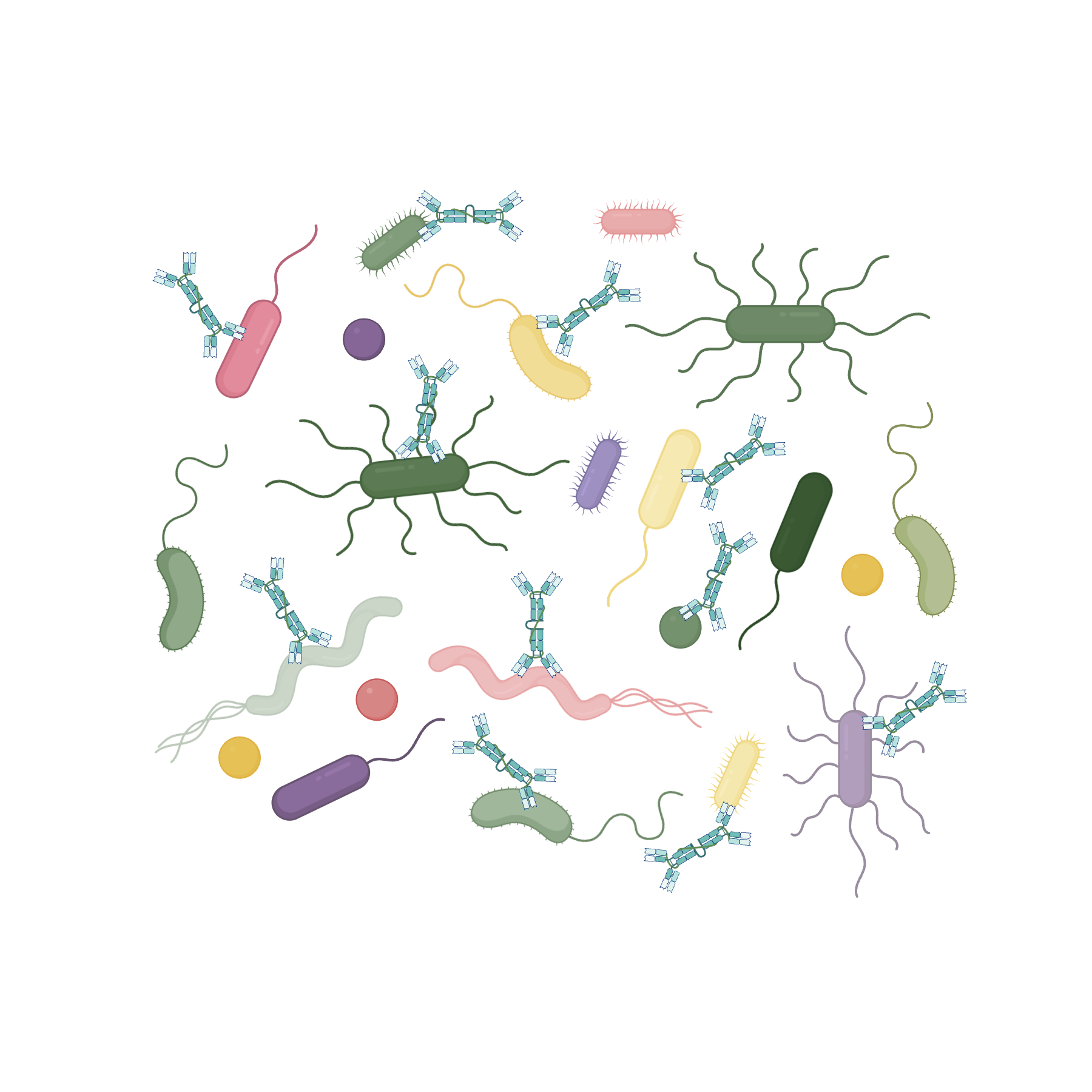
This project focuses on the immune-gut axis in the context of human evolution. It investigates interactions between gut bacteria and immunoglobulin A (IgA), the most abundant antibody in the gastrointestinal tract, and how these interactions vary among human populations worldwide.
Approach
The aim is to compare IgA secretion and IgA-bacteria binding among various human populations living non-industrialized and industrialized lifestyles, as well as to elucidate the effect of IgA secretion on the taxonomic and functional diversity of the gut microbiome.
This project focuses on the immune-gut axis in the context of human evolution. It investigates interactions between gut bacteria and immunoglobulin A (IgA), the most abundant antibody in the gastrointestinal tract, and how these interactions vary among human populations worldwide.

Figure: Conceptual overview of IgA–microbiome interactions across industrialized and non-industrialized populations.
Analysis & Validation
To achieve these aims, high-throughput methods for bacteria sorting, isolation, and sequencing, such as magnetic bead-based IgA-Seq and shotgun metagenomics, are leveraged. Stool samples and metadata from the Global Microbiome Conservancy (GMbC) are used to ensure a wide variety of host locations and lifestyles. The results of this project will provide novel insights into the effects of industrialization on the human metaorganism.
Researcher:
Alexandra Deutsch
 Host-microbiome systems in health & disease